.png "Mr Best Garden")
The 10 Best Drip Irrigation Systems In 2026
Drip irrigation, also called trickle or micro-irrigation, applies water slowly and directly to the roots of plants. Looking for the best drip irrigation system to enhance your gardening experience? Read on to find the perfect solution that meets your needs and saves water effectively.

Overview
Improved water and fertility management, along with decreased disease and weed pressure, can increase crop yields. Yields can rise even higher when polyethylene mulch is utilized in conjunction with drip watering.
Only when a drip irrigation system is correctly planned, managed, and maintained are these advantages attainable. irrigation system design is intricate and outside the purview of this paper. To design your drip irrigation system, you should speak with a licensed agricultural engineer or irrigation equipment dealer.
However, you can make sure that your drip irrigation system is properly built and run by being aware of the many design considerations. This paper discusses system components, fundamental design ideas, real-world applications, and operational procedures.
The following article will help consumers choose the best drip irrigation system at the most reasonable price.

Following a thorough analysis of the various drip irrigation systems, we have compiled a list of our top picks:
-
Best Overall: Flantor Garden Irrigation System
-
Best Basic: Orbit 56318 Hanging Basket Flex-Mist Watering Kit
-
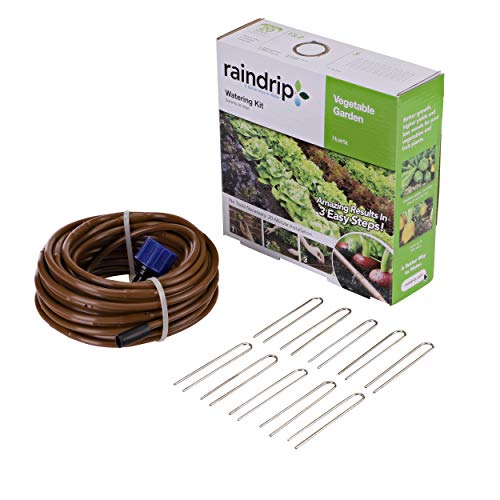
Best Professional: Rain Drip R567DT Drip Watering Vegetable Garden Kit
-
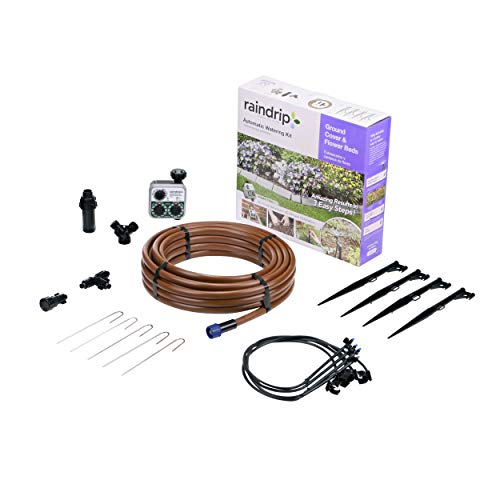
Best Budget: Raindrip SDFSTH1P Drip Kit
-
Best Mid-Size: MIXC 226FT Greenhouse Micro Drip Irrigation Kit
This article does not imply that all irrigation techniques are equally effective. Understanding the numerous options, including their benefits and drawbacks, is necessary to choose which strategy will work best in your particular circumstance. And thus, the following five factors should be taken into account while providing water to your crops:
Soil type: The irrigation run times as well as the type of irrigation technology can be influenced by the type of soil in a particular place. To maintain moisture in the root zone, sandy soils often require regular applications of water at a high rate. Although sandier soils can hold moisture for a longer period of time, tighter clay soils may need more frequent applications of a lower rate to prevent runoff.
Land morphology: Hilly or sloping land in particular might be difficult. If the laterals can be run along topographic lines, drip irrigation performs effectively. To avoid a runoff, system runtimes may need to be modified. On hilly and heavily sloping land, travelers and center pivot systems are typically out of the question.
Regional climate trends: Sprinklers, for instance, are less ideal in areas with frequent high winds and in arid regions with low humidity since water loss due to evaporation can be very substantial in these regions. Both of these circumstances benefit greatly from drip irrigation.
Crops that are grown: Drip and sprinkler systems can be expensive to install. Therefore, it is preferable to employ them on high-value crops like vegetables, small fruits, and orchards, rather than on staple crops like wheat and soybeans.
Water caliber: Filtration is necessary for all types of drip irrigation systems. Most overhead systems, like sprinklers, don't need filtration. Testing for water-borne pathogens should be done on irrigation water. Chlorine injection may be necessary, depending on the crop cultivated and the irrigation technique employed. Levels of soluble iron and other dissolved minerals are potential concerns for other water quality issues.
Hence, To bring joy to gardening, you should consider equipping your house with the following products:
1. Rain Drip R567DT
This Rain Drip irrigation kit is intended to serve as a "beginning" irrigation system. It is a compact, low-cost, and straightforward system. The dripline has 50 feet of 1/4-inch tubing (dripline) with 1/2-inch gallon-per-hour emitters spaced 12 inches apart, as well as an end plug, stakes, and an adaptor that attaches to a faucet.
By acquiring and adding extra tubing and emitters, you can expand the system. Although the pressure regulator for this particular system is not included, it is simple to attach one to the 3/4-inch threaded female hose end. Raised beds are an excellent fit for dripline irrigation systems like this one.
| Pros | Cons |
|
|
2. Orbit 56318 Hanging Basket Flex-Mist Watering Kit
Another compact watering kit that is simple to use (and install) is the Orbit kit. It comes with eight miniature bubblers mounted on stakes that can be connected to the distribution tubing in place of the dripline, like the Rain Drip kit mentioned above.
50 feet of 1/2-inch tubing, 50 feet of 1/4-inch tubing, a faucet adaptor, as well as tees, couplings, and clamps to modify your setup are all included in the kit.
You may easily expand this system to cover a greater area, just like the Rain Drip.
| Pros | Cons |
|
|
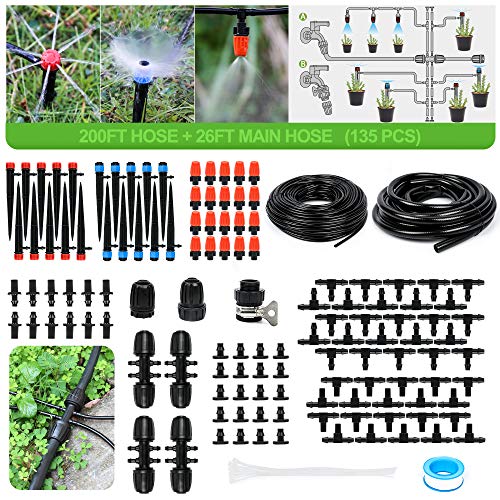
3. MIXC 226FT Greenhouse Micro Drip Irrigation Kit
This MIXC irrigation set has three different types of sprayers, including misting nozzles, eight-hole drip emitters, and scattered sprinklers, if you desire adaptability. The 4 by 6-way connector makes it possible to set up 16 water tributaries that stretch from the start point, helping to address the issue of water not reaching the system's conclusion.
This system can successfully water a garden of up to 160 square feet with 226 feet of irrigation tubing.
| Pros | Cons |
|
|
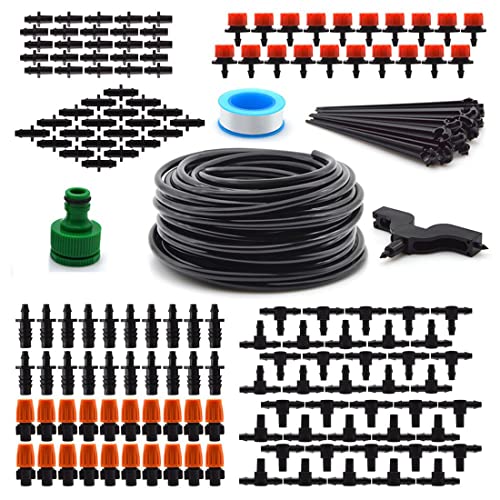
4. Flantor Drip Irrigation Kit
The Flantor Drip Irrigation Kit is a game-changer for any garden, greenhouse, flower bed, patio, or lawn. This comprehensive system is designed to provide a time-saving, water-efficient solution to your watering needs. It uses 1/4" blank distribution tubing to deliver water precisely where it's needed, reducing waste and ensuring your plants receive the exact hydration they require.
The DIY nature of this kit allows you to customize the watering system to your specific needs, creating a tailored solution that promotes healthy, lush growth. Whether you're tending to a sprawling garden or a modest patio display, the Flantor Drip Irrigation Kit offers a practical, cost-effective way to maintain your green spaces.
This automatic watering system is not just a tool, but a trusted ally in your gardening endeavors. It's a testament to the fusion of technology and nature, promoting sustainable practices while keeping your plants vibrant and thriving.
| Pros | Cons |
|
|
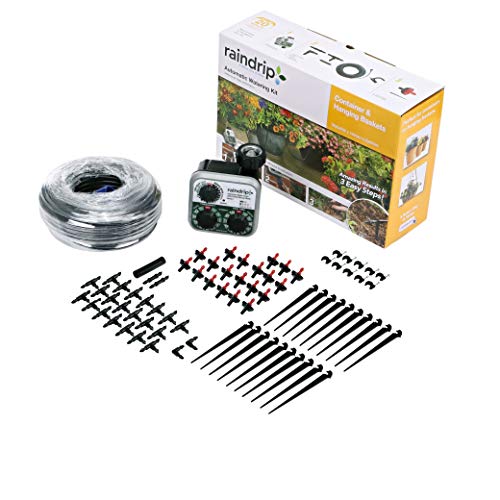
5. Raindrip SDFSTH1P Drip Kit
The Raindrip SDFSTH1P Drip Kit, available in a pack of two, brings a new level of convenience and efficiency to your gardening practices. This easy-to-install drip irrigation system is designed to provide accurate, controlled watering to your plants, reducing waste and ensuring optimal hydration.
Each kit is packed with all the components you need to set up a comprehensive drip irrigation system. This black-colored kit blends seamlessly into your garden, maintaining the aesthetic appeal of your green spaces. The kit is suitable for a wide range of outdoor areas, including gardens, greenhouses, flower beds, and patios.
| Pros | Cons |
|
|
- MR score9.5
MR Score is a ranking system developed by MrBestGarden.com. MR score has no relationship or impact from any manufacturers or sales agent websites. Learn more
- BrandRaindrip
- MR score9.4
MR Score is a ranking system developed by MrBestGarden.com. MR score has no relationship or impact from any manufacturers or sales agent websites. Learn more
- BrandMIXC
- MR score9.5
MR Score is a ranking system developed by MrBestGarden.com. MR score has no relationship or impact from any manufacturers or sales agent websites. Learn more
- BrandFlantor

- MR score9.4
MR Score is a ranking system developed by MrBestGarden.com. MR score has no relationship or impact from any manufacturers or sales agent websites. Learn more
- BrandGardena

- MR score9.2
MR Score is a ranking system developed by MrBestGarden.com. MR score has no relationship or impact from any manufacturers or sales agent websites. Learn more
- BrandOrbit

- MR score9.4
MR Score is a ranking system developed by MrBestGarden.com. MR score has no relationship or impact from any manufacturers or sales agent websites. Learn more
- BrandOrbit
- MR score9.2
MR Score is a ranking system developed by MrBestGarden.com. MR score has no relationship or impact from any manufacturers or sales agent websites. Learn more
- BrandRaindrip

- MR score9.3
MR Score is a ranking system developed by MrBestGarden.com. MR score has no relationship or impact from any manufacturers or sales agent websites. Learn more
- BrandOrbit
- MR score9.3
MR Score is a ranking system developed by MrBestGarden.com. MR score has no relationship or impact from any manufacturers or sales agent websites. Learn more
- BrandRaindrip

- MR score9.2
MR Score is a ranking system developed by MrBestGarden.com. MR score has no relationship or impact from any manufacturers or sales agent websites. Learn more
- BrandRaindrip
Last update on 2023-04-10 / Affiliate links / Images, Product Titles, and Product Highlights from Amazon Product Advertising API
1. What is a drip irrigation system?
Using a system of valves, pipes, emitters, and tubes, drip irrigation - often referred to as trickling irrigation or micro-irrigation - is an irrigation technique that enables precisely regulated distribution of water and fertilizer to plant roots.
Raised beds, polyethylene mulch, and drip watering are all used in plasticulture. In order to produce vegetables with the highest output and earliest harvest possible, plasticulture and transplantation should be used.

2. Is drip irrigation adapted to all operations?
The use of drip irrigation may not be appropriate for all farms; it is not a panacea. However, with good management, it can be an useful production approach that lowers labor and production costs while boosting output. To establish the benefits of drip irrigation for their operation, small farmers considering using this technology should weigh its advantages and downsides.
To ensure the best green garden you need Best Small Drip Irrigation Worth Buying.
3. What are the disadvantages of drip irrigation?
A financial commitment is necessary for drip irrigation, with systems often costing $500 to $1,200 or more per acre (Table 1). A portion of the cost comes from a long-term capital investment, while a separate portion comes from the annual cost of consumable parts. Before switching to a larger system, growers new to drip irrigation should start with a relatively modest system on a small plot of land.
High-quality water and maintenance are necessary for drip irrigation: The tape needs to be replaced if emitters become blocked or sustain damage. It is challenging to see water dripping from an emitter and the resulting wetness pattern, making it challenging to determine whether the system is functioning effectively. A period of learning is necessary for effective drip irrigation management.
The pattern of how water is applied must match the pattern of where it is planted; otherwise, root development may be hampered and/or plants may perish.
Safety: Unless the drip tape is covered with mulch, fixed with wire anchor pins, or gently covered with soil, it may be lifted by the wind or dislodged by animals.
Leak repair: Other farming activities like tilling, transplanting, or hand weeding with a hoe can easily cut or damage drip lines. Large leaks that also need to be fixed can result from bird, rodent, or insect damage to drip tape.
After harvest, drip-tape disposal results in increased cleanup expenses: Drip-tape disposal, recycling, or reuse require planning.
You may select the best drip irrigation system with the aid of our buying tips and reviews, we hope. Our top picks from the list above are because they are composed of premium materials, more robust, and less expensive than other options. Keep in mind to store and care for your equipment in good condition.


Snow Joe Shovel Review: Top Picks for Efficient Clearing

Best Cordless Snow Shovel: Technical Analysis and Guide

Best Electric Snow Shovel: Your Winter Woes, Electrified

Best Lightweight Snow Shovel: Digging Out Without the Workout!

Best Car Snow Shovel: Compact Saviors for Wintry Roads

Best Shovel for Snow: Top 2026 Picks to Slay Winter!

Best Snow Rake: Your Ultimate Guide to a Clear and Safe Roof

Best Snow Pusher: Your Guide to Easy Snow Removal